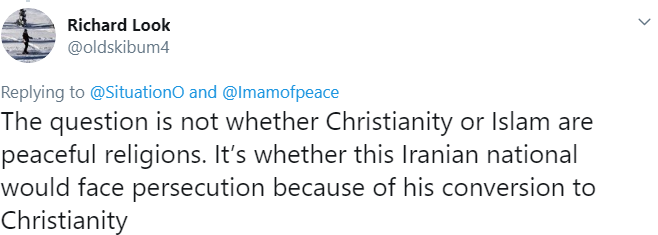
The story of the Iranian national who claimed asylum to the UK after conversion to Christianity has been making waves for the past few days in the UK and Europe.
It all started when an Iranian national went to the UK to seek asylum after he converted to Christianity and amid fears of being persecuted in his home country, where religious conversion is criminalized in addition to the danger of intimidation from society.
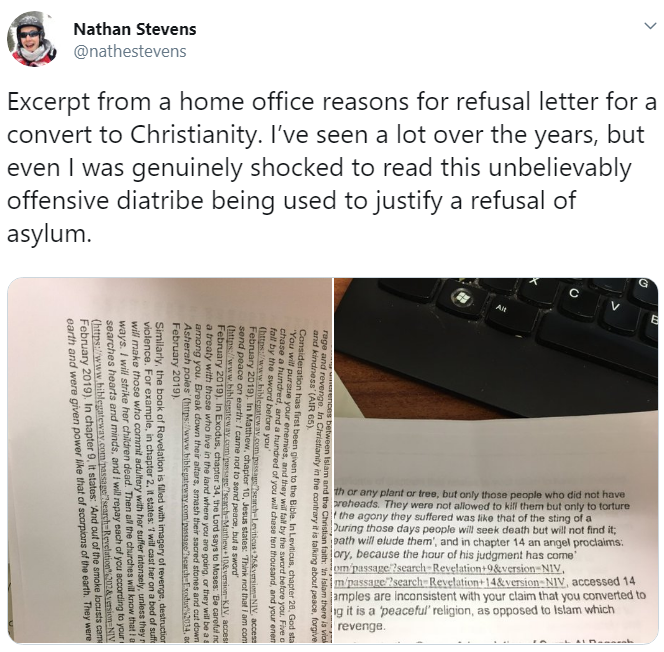
Earlier last week, Nathan Stevens, the asylum seeker’s lawyer went to Twitter to post the letter of rejection received by his client from the UK Home Office.
While it is not surprising that an asylum application is rejected, the reasons cited in the rejection letter were unusual.
As the asylum seeker highlights in his application, the reason behind his conversion is that he thought Christianity is a peaceful faith.
Yet, the UK Home Office employer seems to disagree with him and quotes bible passages to prove that Christianity is not a peaceful religion.
The rejection letter cited verses from, Leviticus, Exodus, Matthew, and Book of Revelation - the final book of the Bible – as “filled with imagery of revenge, destruction, death, and violence”. It goes to quote Leviticus stating: “You will pursue your enemies, and they will fall by the sword before you.”
It then goes to state: “These examples are inconsistent with your claim that you converted to Christianity after discovering it is a ‘peaceful’ religion, as opposed to Islam which contains violence, rage, and revenge.”
The story went viral with more people weighing in on the controversy condemning the Home Office position.
Opinions were split between people claiming the Home Office’s decision was made on an anti-Christian basis.
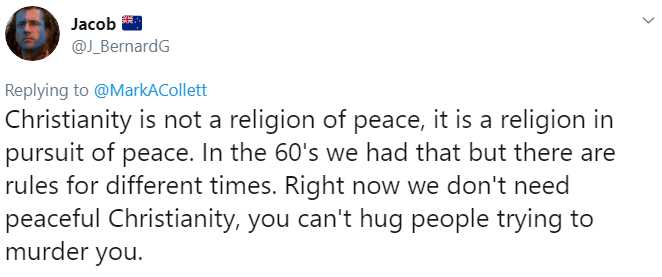
While others argued it was likely a case of anti-asylum who used his argument to reject it.

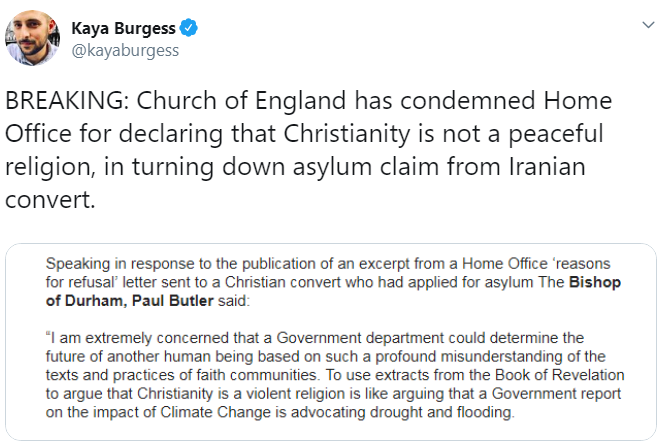
Meanwhile, officials from the Home Office confirmed the letter is “not in accordance” with the policy approached by them regarding religious persecution cases.
In the meantime, several people raised concerns over the fact that this asylum seeker might face persecution in his home country as a result of the Home Office decision.