


ALBAWABA - U.S. President Donald Trump announced days ago that he believes Mojtaba Khamenei, the supreme leader of Iran, is "90 percent killed".
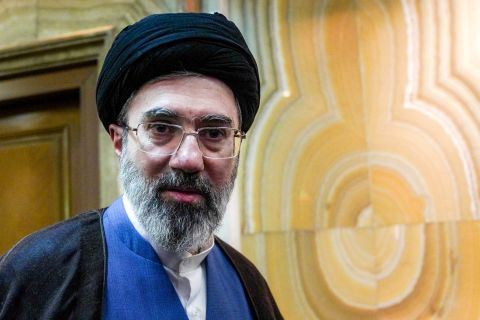
Trump believed Khamenei was "90 percent killed," in remarks addressing developments in the confrontation with Iran as tension rises between the two countries.
Mojtaba was injured in the February 28 attack by the U.S. and Israel on Tehran. His father, former supreme leader of Iran Ali Khamenei, and several family members were killed in the same strike.
Mojtaba's face was disfigured, and he suffered a significant wound to one or both legs, people close to his inner circle told Reuters.
Khamenei, who became Iran's supreme leader in early March following the assassination of his father, Ali Khamenei, and several other senior officials in an attack targeting their meeting in Tehran on Feb. 28, has not been seen in public yet.
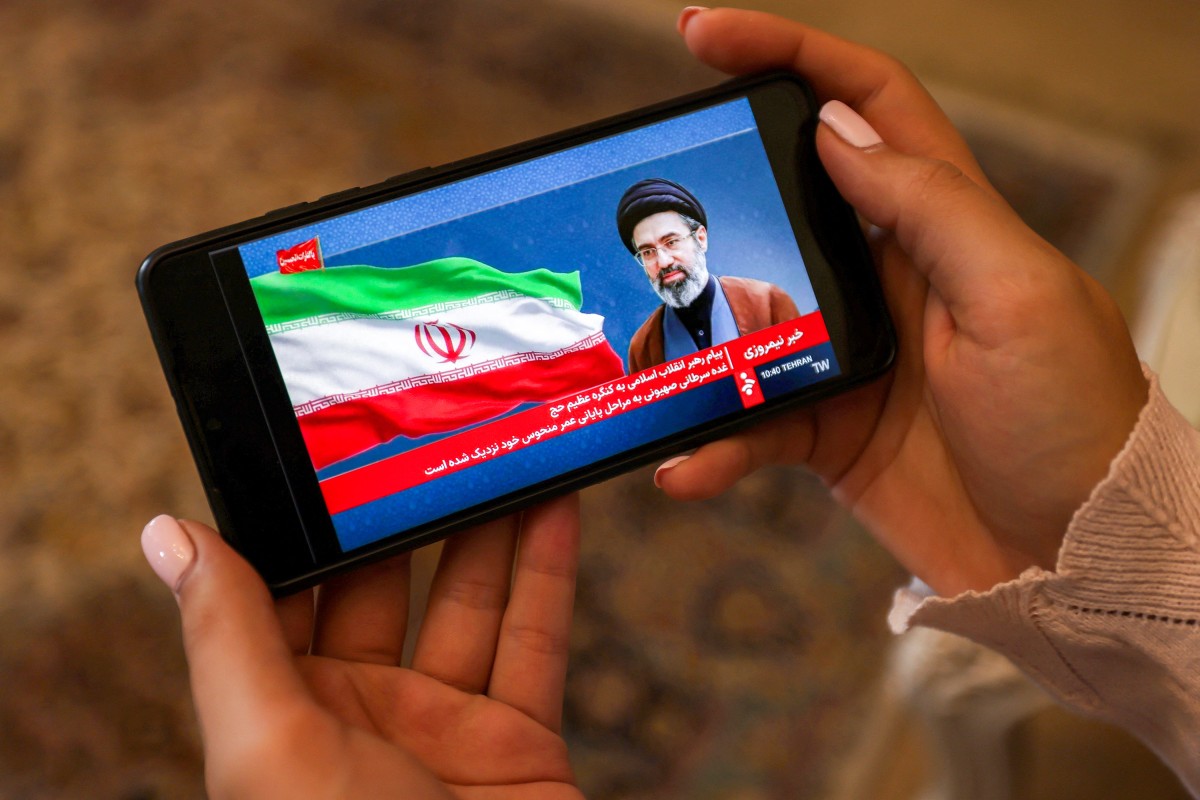
A woman watches a televised broadcast delivered on behalf of Iran's supreme leader Mojtaba Khamenei in Tehran on May 26, 2026. Photo by ATTA KENARE / AFP
How do Iranian officials contact Mojtaba Khamenei?
Shahrokh Ramin, a member of the Iranian parliament's social committee, claimed that meetings between Mojtaba Khamenei, the president, the speaker of parliament, and members of the Supreme National Security Council are currently being held online for security reasons.
According to Iranian media reports on Wednesday, Ramin explained that the limited number of participants in Supreme National Security Council meetings allows for their rapid virtual convening without the need for a fixed location or pre-announced time.
He added that the situation differs for parliamentary sessions due to the large number of representatives, as these require pre-determined time and place, which, he said, could increase security risks.


