multiple donations keep aid workers airborne in darfur, avoiding carjackers
Humanitarian workers will be able to keep flying to remote locations in Darfur, thanks to a hefty US$18 million package of new contributions from several donors that will allow the United Nations World Food Programme’s Humanitarian Air Service (WFP-HAS) to keep operating until October.
“We're very grateful for these generous donations,” said Kenro Oshidari, WFP's Representative in Sudan.”Without the service offered by WFP-HAS, many of the 12,000 humanitarian workers in Darfur would not be able to get out to the field – and that's especially true because carjackings have recently been on the rise. It is becoming ever more dangerous for our staff to use the roads.”
A US$5.5 million (€4 million) donation from the European Commission’s Humanitarian Aid department (ECHO) led the package of new financing. Other donors were the United States, which gave US$4.9 million; two separate United Nations funds, with a combined contribution of US$4.2 million; Denmark, US$3 million; and Greece, US$409,000.
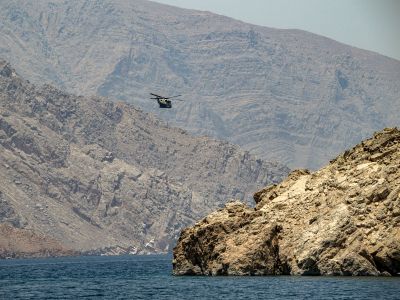
The air service has been flying in Sudan since 2004. Currently operating a fleet of six helicopters and nine fixed wing aircraft, it carries passengers and cargo throughout strife-torn Darfur and is also used for medical evacuations.
The volatile security situation and lack of infrastructure, plus the coming rainy season – which is beginning now and will run until October – means that helicopter travel is often the only way that humanitarian workers from UN agencies and non-governmental organizations can reach people affected by the Darfur conflict.
WFP-HAS has proved to be particularly useful in recent months as a result of the alarming increase in attacks on humanitarian vehicles. To date this year, the UN says that some 70 cars, belonging to either international aid organizations or African Union peacekeeping troops, have been stopped on the roads by gunmen and frequently stolen. AU troops have been killed during these incidents but no relief workers have died. Aid organization drivers and passengers have, however, often been physically assaulted, as happened earlier in June when three WFP staff members were abducted and beaten.
The number of carjackings this year is already 60 percent of the total during 2006, when 118 vehicles were attacked.
The two UN funds which contributed new financing were the Central Emergency Response Fund, or CERF (see: http://ochaonline.un.org), which gave US$3 million and the Common Humanitarian Fund, which donated US$1.2 million.
During 2007, other donors were the European Commission, the United States, Denmark, Canada, Greece, Switzerland and Sweden. The 2007 shortfall for the operation is US$10 million.
# # #
WFP is the world's largest humanitarian agency: on average, each year, we give food to 90 million poor people to meet their nutritional needs, including 58 million hungry children, in 80 of the world's poorest countries. WFP – We Feed People.
WFP now provides RSS feeds to help journalists keep up with the latest press releases, videos and photos as they are published on WFP.org. For more details see: http://www.wfp.org/english/?n=999.