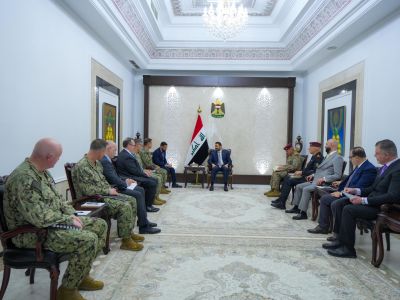
European Union officials have followed closely and with great concern the meeting in Algiers between the Russian Minister of Energy and Industry, Mr. Victor Khristenko and the Algerian Minister of Energy and Mining, Mr. Chakib Khelil. This two hours audience has been dedicated to discuss the potential of cooperation between the two countries, mainly in the gas sector.
Many in the EU have raised concerns that an Algerian – Russian accord would increase prices and in fact will create a cartel. Russia and Algeria are the EU's biggest suppliers of fuel. This Algerian-Russian collaboration represents a rapprochement of the two major gas suppliers in the European gas market. In fact, Gazprom alone controls a quarter of the European Union’s gas needs while Algeria stands for 10%. Hence, certain countries are heavily dependent either on Russia or on Algeria for their gas supplies and in some cases, like Italy for instance; the joint market share of the two companies even reaches 72%.
In addition, the fear of an OPEC-style cartel for gas was even intensified by the fact that Russia has lost its reputation of being a reliable supplier when it decided to use Gazprom as a political weapon against Ukraine and took the decision to briefly cut its gas supply to Europe.
In order to ease those concerns, Khelil has claimed that while the oil market is liquid, the gas market is a regional market and thus at this stage it was early to speak on OPEC for gas. Additionally, experts also tend to reject the assumption of alliance between the two countries as their long term interests might appear to be more competitive than cooperative. In fact, one of the very goals for Russia, within this cooperation, is to develop its gas-liquefaction capacity in order to get into the LNG market where Algerian petroleum state company Sonatrach is already well established. On the other hand, Algeria is willing to cut gas prices in order to gain market shares in Eastern Europe and therefore weaken the Russian supremacy over those markets.
To conclude, the EU clients fear that a Russian – Algerian partnership will lead to a rise in LNG prices. Therefore, Europe might apply a policy of diversification of its supplies and turn to importing liquefied gas from America in order to reduce its dependency on a limited number of suppliers.
In any case, the Algerian and the Russian sides also discussed the opportunity to explore a gas field that has been discovered early 2006 in the very south of Algeria by Russian companies Rosneft and Stroytrans. It is estimated that an investment of US$ 3 to 4 billion will be needed to commercialize this field.
The two sides also discussed the exchange of experience and the intensification of the relationship between Gazprom , a state-controlled monopoly of natural gas in Russia and Algeria's Sonatrach which had already signed a Memorandum of Understanding in August 2006.