


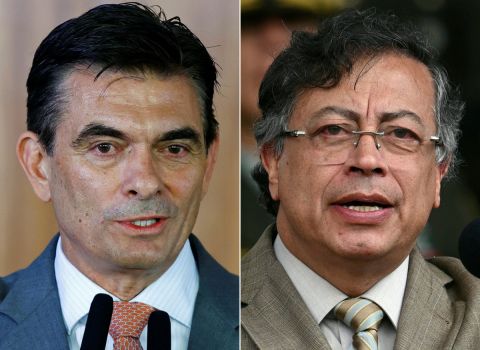
ALBAWABA - US President Donald Trump is playing a major role in Colombia’s upcoming presidential election, where his ally, right-wing millionaire lawyer Abelardo De La Espriella, is competing against leftist candidate Ivan Cepeda amid growing public demand for a leader able to balance security and justice.
Colombia remains rife with violence, organized crime and armed organizations, and the vote occurs amid that turmoil. One of the biggest difficulties that the next president will face is the country’s cocaine trade, still related to insecurity and the surge in political and criminal murders.
Colombia is the world’s biggest producer of cocaine, responsible for over 60% of worldwide production, and a key player in the international drugs trade.
The contest technically has 14 candidates, but recent surveys show three frontrunners: left-wing senator Ivan Cepeda, conservative senator Paloma Valencia and, the closest thing to a Trump figure, De La Espriella, the right-wing candidate.
“Elections are more than choosing leadership,” said political expert Dr. Mohammed Al-Mouden. He described it as a strategic test of Colombia’s ability to deal with violence and decide its future relationship with armed organizations. Voters, he said, are being forced to choose between continuing negotiations and peace attempts, or a more hardline security stance based on the expansion of the military and police.
“Decades of civil conflict, peace agreements and security policies have made Colombians very conscious of the costs and limitations of each option,” Al-Mouden said. He therefore believes that voters will be less inclined to adopt a strictly hardline security policy or an unconditional peace plan. But many are asking for a hybrid approach, combining law enforcement, accountability and negotiations.
The result of the election will have effects on the whole of Latin America, said Dr. Hassan Al-Zein, an analyst on South America. He said important problems affecting voter preferences included security concerns, the presence of criminal organizations and unsolved conflicts involving ex-guerrilla groups.
Al-Zein said that the fight is increasingly seen as a duel between Cepeda and De La Espriella, with the prospect of a runoff election because of the divisiveness around significant national problems. He also observed that violence is still firmly embedded in Colombian society and related to overlapping domestic and international agendas.
The cocaine trafficking has become one of the issues defining the election, and has helped fuel worsening security and a spike in homicides, said Al-Zein. A leftist triumph may heighten relations with Washington, while a win by the openly pro-Trump De La Espriella might change politics across South America and boost U.S. dominance in the region, he said.


