




ALBAWABA- At least 51 people were killed and more than 100 others injured after a powerful magnitude 7.7 earthquake struck eastern Indonesia early Saturday, according to the country’s National Disaster Management Agency (BNPB). The death toll is expected to rise as rescue teams reach isolated areas and continue searching for survivors.
The earthquake struck at about 5:58 a.m. local time, with its epicenter around 68 kilometres north-northwest of Ende on Flores Island in East Nusa Tenggara province. The quake occurred at a shallow depth of about 10 kilometres, amplifying the shaking across Flores and surrounding areas.
Authorities described it as one of the region’s strongest earthquakes in more than three decades, comparable in magnitude to the devastating 7.5 earthquake recorded in 1992.
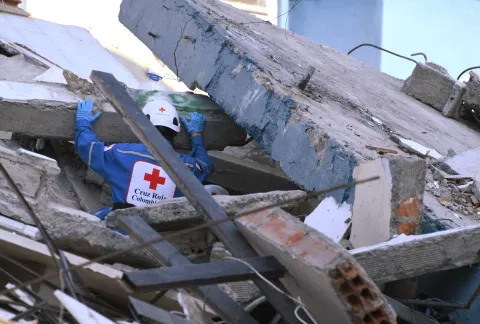
More than 900 homes collapsed or were destroyed, while about 450 others were damaged. Schools, health facilities and places of worship were also affected. Landslides triggered by the earthquake blocked major roads and hampered rescue operations, particularly in the worst-hit areas of Manggarai, East Manggarai, Sikka and Nagekeo.
Around 5,000 people were forced to evacuate their homes and seek shelter in temporary camps or open areas. Many residents spent the night outdoors amid fears of further tremors. Hundreds of aftershocks were recorded following the main earthquake, although most were weaker.
A tsunami warning issued shortly after the quake was lifted several hours later after monitoring detected only minor waves of less than one metre in some coastal areas. Rescue teams, supported by national and local authorities, continued searching collapsed structures and areas cut off by landslides. Medical teams treated the injured at hospitals and emergency facilities, while authorities distributed food, water and shelter supplies to displaced residents.
Indonesia lies along the seismically active Pacific Ring of Fire and is frequently affected by earthquakes. The latest disaster has again highlighted the vulnerability of communities in the country’s mountainous and coastal regions as search, rescue and recovery operations continue.


