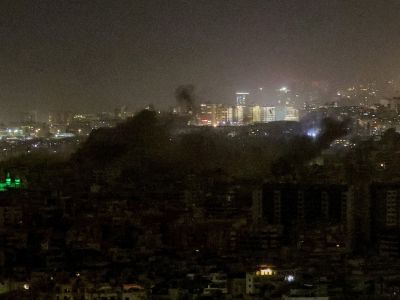


It has become clear that Hizbullah's limited budgets will not come close to funding the massive reconstruction projects necessary to rehabilitate Lebanon now that a cease-fire has been implemented with Israel.
As communities across the country lie devastated and refugees return to sites they previously referred to as home, many Lebanese are wondering who will provide the necessary funds to help them resume normal lives.
Lebanon's reconstruction process is estimated at some $10 billion, with thousands of homes destroyed, nearly 200 bridges and roads out of commission, water and fuel stations damaged, the country's tourism sector devastated, and nearly one million citizens displaced.
In a televised speech Monday night by Hizbullah leader Hassan Nasrallah, mention was made on several accounts of his concern with reconstruction efforts in the country. Nasrallah promised that Hizbullah would help rehabilitate the country and ease suffering amongst his predominantly Shiite constituency.
"Those people whose houses are destroyed, but still can reside in them would receive emergency financial assistance as of tomorrow to return to their houses," he vowed.
Nasrallah went on to request that those who can volunteer their services to help rebuild homes should do so, especially engineers, architects, merchants and businessmen.
Though Kuwait and Saudi Arabia have already granted a $2 billion loan to Lebanon's central bank to help it get back on its feet, it is clear that more funds will be needed to return some sense of normalcy to the country.
Notably, Iran has also pledged to help Lebanon with its reconstruction costs. However, some Lebanese citizens have expressed hesitation over aid packages from Hizbullah's oil-rich backer.
"Lebanese must think wisely before committing themselves to other nations' interests by accepting money from them," said one resident of Beirut whose home was spared in the month-long Israeli barrage.
"It must free itself from over-involvement by other nations, a problem that we Lebanese know all to well," she added.
Another resident of Beirut was not so lucky, finding her home demolished, though she expressed similar sentiment.
"What was this war all about?" she pleaded, "We Lebanese have been set back by a decade. Our economy and our democracy lie in ruins, like our homes. For what? For a one-week boost in 'Arab honor?' So that Iran could distract the world's attention from its nuclear program? You did all this to us for another country?" she went on, according to the Daily Star.
In light of hesitancy to accept aid indiscriminately on the part of many Lebanese amidst the nation's delicate political situation, it is likely that the Lebanon's leaders will choose the path to rehabilitation carefully, lest they lose political support from war-wary citizens.
To win the battle of reconstruction currently facing the Lebanese people now that the guns have been silenced, it is clear that Lebanon will require the help of nations in the Gulf, as well as in the West.