ALBAWABA - A sexual video reportedly involving a general manager of an oil company in Iraq and his employee is still dominating social media discussions and sparking wide outrage among the community in Baghdad.

The manager of Iraq's Oil Project Company (SCOP), Engineer Iyad Hussein, appeared in an interview on an Iraqi channel to respond to the viral sexual scandal attributed to him.
Hussein broke down in tears during a live broadcast with Iraq alhadath channel as he explained how he was blackmailed for a year in exchange for paying astronomical sums of money.
An adultry video went viral online, claiming to involve the general manager of the oil projects company and the director of the financial affairs department. The company and Iyad Hussein denied the authenticity of the clip, saying that it was generated by Artificial Intelligence (AI) and vowed to sue people and websites that share false claims online.
Until this moment, there has been no official statement or action by the government in Iraq, despite public calls to open an investigation into the case and probe the footage.
Iraq's Oil Project Company responds to the video:
Iraq's Oil Project Company (SCOP) made an official statement on Facebook denying that the person in the viral sexual video is the company's general manager, confirming that the claims are " false".
It said, "The Oil Projects Company wishes to clarify to the public, and all relevant parties, the truth regarding a video recently circulated on some social media pages, accompanied by false claims alleging that the company's General Manager is the person appearing in the video."
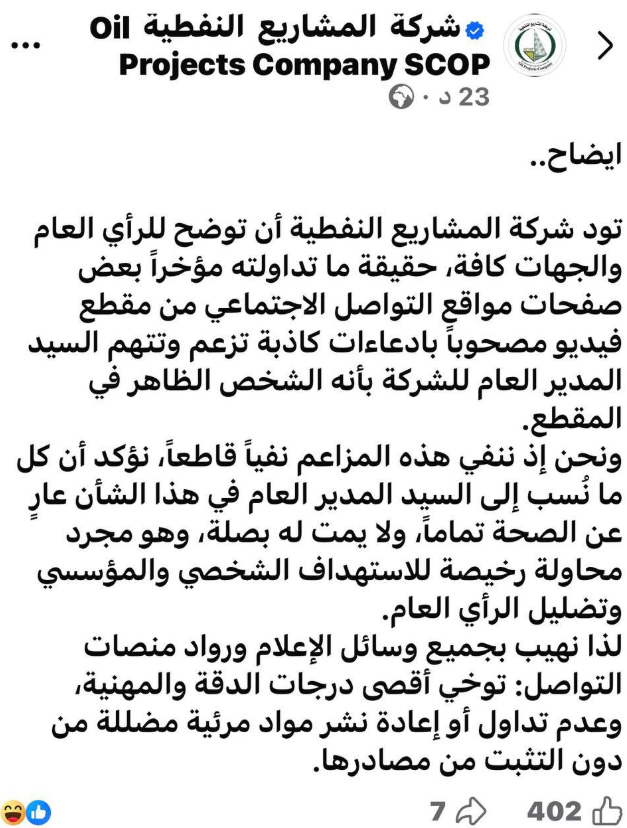
The statement continued, "While we categorically deny these allegations, we affirm that everything attributed to the General Manager in this regard is completely false and has no connection to him whatsoever. It is merely a cheap attempt at personal and institutional targeting and to mislead public opinion."
The company also urged all media outlets and social media users to exercise the utmost accuracy and professionalism and to refrain from circulating or republishing misleading visual materials without verifying their sources.