WCM-Q Grand Rounds explores effects of political conflict on mental health
Press release

The impact of political conflict and uncertainty on mental health was the focus of the latest Weill Cornell Medicine-Qatar (WCM-Q) Grand Rounds Live Webinar Series.
Delivered by WCM-Q alumnus Dr. Sulaiman Alshakhs, a psychiatrist and clinical associate in psychiatry at WCM-Q, the presentation was titled “The Medicine of Uncertainty: Fear, Rumors, and Emotional Contagion During Regional Crises.” The session attracted a record audience of 628 participants.
The session defined intolerance of uncertainty during geopolitical crises while identifying common clinical presentations during conflict, including post-traumatic stress disorder (PTSD), post-traumatic stress (PTS), stress, anxiety disorders and major depressive disorders. It also outlined strategies to address conflict-related stress.
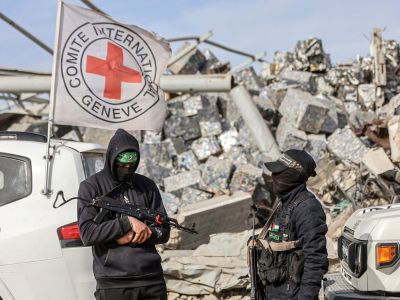
“Modern conflicts disproportionately affect civilians, leading to higher rates of PTSD, depression and anxiety. Distress is not limited to those directly exposed to conflict, as individuals may also be affected through cultural ties, transgenerational trauma and continuous media exposure,” Dr. Alshakhs said.
The most commonly reported symptoms include insomnia, anxiety, panic attacks, anhedonia, persistent sadness, hopelessness, substance use, and relapse or worsening of existing mental health conditions.
The presentation also emphasized the importance of distinguishing between what is within an individual’s control and what is not. “While many questions remain about vulnerability and protective factors, focusing on controllable factors can help individuals build resilience and adapt constructively during periods of uncertainty,” he added.
The World Health Organization (WHO) highlights 10 self-help techniques to manage mild symptoms and help prevent more severe conditions from developing. These include psychoeducation and awareness to reduce stigma and improve coping; breathing, relaxation and grounding techniques to ease hyperarousal and panic; physical activity and body care to promote overall wellbeing; structured daily routines to create predictability and control; social support and community networks to encourage emotional validation and lower the risk of depression; mindfulness and spirituality to limit trauma symptoms and foster meaning and hope; managing information flow to avoid overload; creative expression and journaling as emotional outlets; tailored approaches for specific groups, such as storytelling for children; and digital and mobile tools to broaden access to coping methods.
Although self-help techniques can be effective, individuals with persistent or worsening symptoms that endanger themselves or others should be referred for specialist psychiatric support.
The WCM-Q Grand Rounds Live Webinar Series is delivered by WCM-Q’s Division of Continuing Professional Development and is aimed at physicians, nurses, dentists, pharmacists, allied health practitioners, students, researchers and educators. The series offers high-quality continuing medical education and professional development opportunities across a range of multidisciplinary topics.
The webinar was accredited locally by the Ministry of Public Health’s Department of Healthcare Professions–Accreditation Section (DHP-AS) and internationally by the Accreditation Council for Continuing Medical Education (ACCME). To watch a recording of the session, visit https://www.youtube.com/watch?v=OsybpwPauBg
For more information or to register for upcoming CPD events, visit https://qatar-weill.cornell.edu/continuing-professional-development/cpd…

© 2000 - 2026 Al Bawaba (www.albawaba.com)
Background Information
Weill Cornell Medical College in Qatar
Weill Cornell Medicine - Qatar is a partnership between Cornell University and Qatar Foundation. It offers a comprehensive six-year medical program leading to the Cornell University M.D. degree with teaching by Cornell and Weill Cornell faculty and by physicians at Hamad Medical Corporation (HMC), Aspetar Orthopedic and Sports Medicine Hospital, the Primary Health Care Corporation, the Feto Maternal Center, and Sidra Medicine, who hold Weill Cornell appointments. Through its biomedical research program, WCM-Q is building a sustainable research community in Qatar while advancing basic science and clinical research. Through its medical college, WCM-Q seeks to provide the finest education possible for medical students, to improve health care both now and for future generations, and to provide high quality health care to the Qatari population.
Check out our PR service
Subscribe
Sign up to our newsletter for exclusive updates and enhanced content