One of the most prominent Saudi TV hosts and the President of the Radio and Television Authority in Saudi Arabia, Daoud Al Sharyan, has been dominating debates among Saudis for a couple of weeks now.
On his new talk show being aired on the Saudi Broadcasting Authority-owned TV channel, SBC, Al Sharyan has been facing backlash for addressing “sensitive” and major topics regarding women rights, the guardianship laws, and drugs.
On last Monday’s episode, Al Sharyan dedicated the whole episode to discuss a state-run app called Absher. The app that has been coming under scrutiny recently after a report released by the Insider website accusing the Saudi government of using it to help male guardians track women and prevent them from traveling outside Saudi Arabia.
During the episode, Al Sharayn hosted Atyeh Al Anazy, the ‘Absher’ app manager, Khalid Al Seikhan, the assistant of the General Directorate of Passports’ general manager, in addition to two other guests related to the matter.
Daoud Al Sharyan starts the episode by reviewing the pros of the application which provides several governmental services; including applying for jobs and Hajj permits. However, he mentions the one application service that enables male guardians; fathers, husbands, brothers or any part of the family, to control travel permissions and passports issuance requests for women.
While Daoud addressed his guests trying to get more explanation of how the application works and who is responsible about allocating permits for the several services provided through it, his guests denied what media reports have mentioned about the app sending SMS to male guardians whenever a woman uses her passport at the border crossing or in the airport check-in.
The host quickly refutes their remarks and mentioned that this service was provided earlier but not anymore and it was canceled in 2012.
A heated debate has ensued between Daoud and his guests over the matter.
Meanwhile, it took Saudis only a few hours before going to Twitter to launch hashtag “#أوقفوا_داوود_الشريان” [Stop Daoud Al Sharyan], in order to protest and condemn his way of discussing social and cultural taboo topics.
Thousands of Saudis jumped on the story and expressed their points of view.
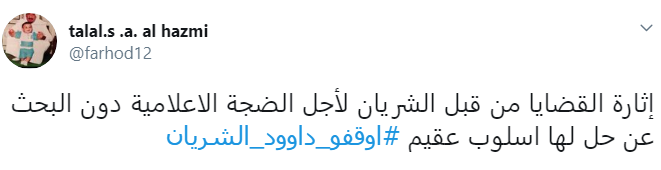
Translation: “Discussing topics by Sharyan aiming to attract media attention without providing actual solutions is a sterile way.”
On the other hand, many Saudis argued that Sharyan’s way of discussing topics beyond the social and cultural restrictions is the only way to help to repair the outdated laws of the Kingdom.
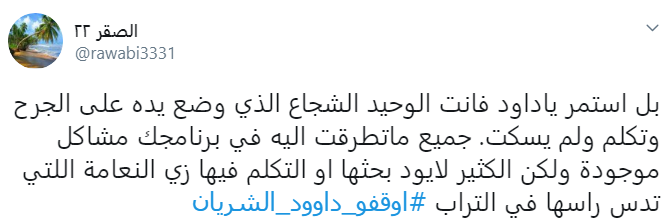
Translation: “On the contrary, [you] should continue as the only brave one who is hitting the nail on the head and did not stay silent. All of what you discussed in your program is an existing problem but many people don’t want to discuss it like an ostrich that is burying its head in the sand.”
A backlash against Daoud Al Sharyan is not of something new. Earlier in February, Shayan's first episode of the TV show ignited massive outrage among Saudis. It discussed the issue of Saudi women fleeing the Kingdom and seeking asylum abroad due to the oppressive laws they are facing.
At the time, hashtag #هروب_الفتيات_مع_داود [Women fleeing with Daoud] was trending among the worldwide trends list with Saudis accusing him of promoting “obscenity” while others applauded his courage in talking about it.
Meanwhile, the fact that Daoud Al Sharyan is a prominent public figure in Saudi Arabia who was one of the few journalists to host King Salman and the Crown Prince Mohammed bin Salman on TV interviews has got people talking about his power and ability to discuss such sensitive topics in a time the Saudi government is carrying a crackdown on freedoms and activists.
Some Saudis had even suggested that Daoud Al Sharyan’s TV show and letting him get away with it without being prosecuted or stopped by the government is an important turning point that might indicate a massive change in the media rhetoric that paves the way to more actual changes on the ground.