


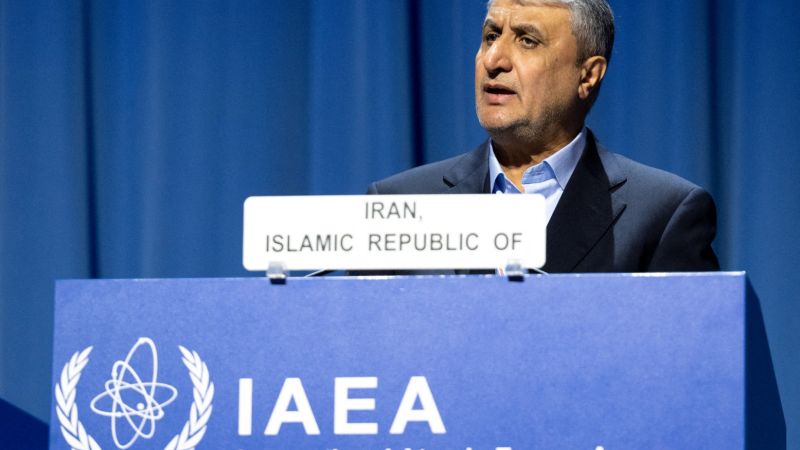
ALBAWABA- The International Atomic Energy Agency (IAEA) Board of Governors on Wednesday adopted a U.S.-backed resolution calling on Iran to fully disclose its remaining enriched uranium stockpiles and allow inspectors immediate access to verify their location and status.

The resolution, submitted by the United States, Britain, France, and Germany, was approved by the IAEA's 35-member board with 21 votes in favor, three against, Russia, China, and Niger, and 10 abstentions. The vote took place behind closed doors amid heightened tensions between Washington and Tehran following recent military confrontations and stalled diplomatic efforts.
The measure urges Iran to provide complete information regarding its nuclear material inventories and grant the UN nuclear watchdog access “without delay” to account for enriched uranium believed to remain in the country following last year's conflict.
International concern has focused on the fate of Iran's enriched uranium stockpiles after Israeli and U.S. strikes in June 2025 targeted key nuclear facilities, including Natanz, Fordow, and Isfahan. Before the attacks, the IAEA estimated that Iran possessed more than 9,000 kilograms of low-enriched uranium and approximately 441 kilograms enriched to 60% purity, a level close to weapons-grade material.
While the strikes reportedly damaged major enrichment infrastructure, Western governments and the IAEA believe much of the enriched uranium may have survived, either relocated or buried beneath damaged facilities. Verification efforts have remained suspended since IAEA inspectors left Iran during the conflict for security reasons.
The resolution marks the latest attempt by Western powers to restore transparency over Iran's nuclear program. It follows a June 2025 IAEA Board decision that formally found Iran in breach of its safeguards obligations for the first time in nearly two decades.
Iran strongly rejected the resolution, describing it as politically motivated and an effort to deflect responsibility for the consequences of U.S. and Israeli military actions. Deputy Foreign Minister Kazem Gharibabadi argued that the strikes on Iranian nuclear facilities disrupted monitoring activities and forced inspectors to leave the country, making verification impossible.
Iranian officials accused Washington and its allies of attempting to “whitewash” attacks on safeguarded nuclear sites and insisted that the Board should instead condemn the military strikes. Tehran continues to maintain that its nuclear program is exclusively peaceful and has warned that additional pressure could lead to further reductions in cooperation with the IAEA.
The vote comes at a sensitive moment for diplomacy. The United States and Iran are engaged in efforts to preserve a fragile ceasefire and revive discussions over Tehran's nuclear activities. However, the latest resolution is likely to deepen tensions and complicate negotiations as both sides remain divided over transparency, sanctions, and regional security.
IAEA Director General Rafael Grossi has repeatedly called on Iran to resume cooperation and allow inspectors to return, warning that the agency cannot provide credible assurances about Iran's nuclear material without direct access.


