ALBAWABA- President Donald Trump has claimed that Iran has agreed, or will eventually agree, to long-term weapons inspections to verify what he described as Tehran's “nuclear honesty,” despite Iranian officials publicly rejecting any new nuclear commitments.
In a post on Truth Social, Trump said Iran would accept a long-term inspection regime aimed at ensuring it does not develop nuclear weapons, portraying the move as a major diplomatic breakthrough and a central condition for any future agreement with Washington.
Trump reiterated that preventing Iran from acquiring nuclear weapons remains a non-negotiable US objective and linked future sanctions relief, maritime security in the Strait of Hormuz, and broader regional de-escalation to verifiable nuclear commitments.
The remarks come as the United States and Iran continue high-level negotiations in Switzerland following a recent memorandum of understanding designed to reduce regional tensions, facilitate maritime navigation, release frozen assets, and advance ceasefire arrangements in conflict zones across the Middle East.
The latest round of talks involved senior US and Iranian officials, including Vice President JD Vance, and was intended to establish a framework for implementing confidence-building measures.
Trump has repeatedly asserted that Tehran has either conceptually accepted or is prepared to accept international inspections, potentially involving the International Atomic Energy Agency or other internationally approved monitoring mechanisms. He has framed the proposal as a significant departure from previous agreements and dismissed conflicting statements from Iranian officials.
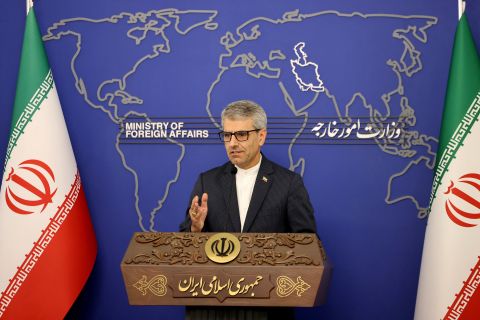
However, Tehran has directly contradicted those claims. Iranian Foreign Ministry spokesperson Esmaeil Baghaei said Iran neither negotiated its nuclear programme nor accepted any new obligations during Sunday's discussions in Switzerland.
According to Iranian officials, the talks focused instead on implementing the existing memorandum of understanding, verifying sanctions relief, ensuring compliance with the Lebanon ceasefire, and addressing maritime security in the Strait of Hormuz.
Iran continues to maintain that its nuclear activities are exclusively peaceful and has resisted proposals for additional binding inspection mechanisms or new limits on uranium enrichment beyond existing arrangements.
US officials have nevertheless described the negotiations as cautiously constructive. Washington has pointed to potential progress, including discussions on resuming International Atomic Energy Agency access and establishing a sixty-day roadmap covering sanctions implementation, maritime security, and de-escalation mechanisms.
Significant differences remain unresolved, particularly regarding verification procedures, enrichment activities, and the scope of future inspections. The gap between Trump's public statements and Iran's official position highlights the fragility of the diplomatic process and the challenges facing mediators, including Qatar, Oman, and Pakistan, as they attempt to bridge longstanding disputes.