ALBAWABA - On Friday, President Donald Trump announced that American forces had conducted strikes in Venezuela, resulting in the arrest of President Nicolás Maduro and his wife. Trump asserted they were then flown out of the country after what he characterized as a successful operation.
No additional details were offered by Trump, and U.S. authorities did not immediately confirm his statements. Venezuelan officials remained silent on the matter initially. CBS News, citing anonymous sources, reported that elite U.S. Delta Force units participated in the arrest.
Earlier, journalists in Caracas reported the sound of fighter jets and multiple explosions throughout the capital, with smoke billowing from various locations. The Associated Press noted that at least seven explosions were audible in the city.
Explosions were also reported at strategic sites beyond Caracas, such as the port of La Guaira, coastal regions, and the city of Higuerote. Other locations allegedly hit included Higuerote Airport, the La Carlota air base, and the Fort Tiuna military complex.
Venezuela's Defense Minister, Vladimir Padrino López, condemned the attacks, labeling them the most significant assault the country had ever endured from the United States, an act of aggression in his view. He announced that the armed forces were on high alert and called on the populace to stay united and prevent any disturbances.
Venezuela's foreign minister announced that President Maduro had declared a nationwide state of emergency, accompanied by the immediate mobilization of popular defense forces. He characterized the reported strikes as a breach of the UN Charter, cautioning that any effort to force a change of government would be unsuccessful.
The foreign minister further accused Washington of deliberately targeting civilian populations and critical infrastructure. He stated that Caracas would exercise its right to self-defense, claiming the attacks were designed to appropriate Venezuela's oil and gas reserves.
Regional Responses
Colombian President Gustavo Petro requested an emergency meeting of the UN Security Council, pointing to reports of explosions and unusual military maneuvers within Venezuela.
Cuban President Miguel Díaz-Canel denounced what he termed a "criminal attack" by the United States.
These events unfold against a backdrop of intensified pressure from Washington on Caracas. U.S. officials have accused Maduro of heading a significant drug trafficking operation, a charge Venezuela vehemently denies.
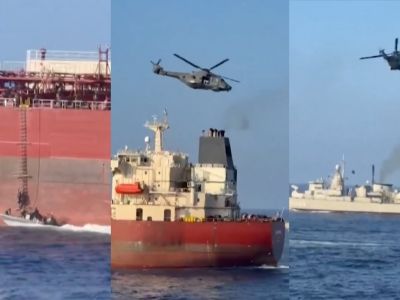
Since September, U.S. forces have conducted numerous maritime operations in the Caribbean and eastern Pacific, focusing on vessels suspected of drug trafficking. Caracas contends that these allegations are being used to justify attempts to destabilize the government and seize control of its natural resources.