


ALBAWABA- The United States has lifted counterterrorism sanctions on three Iranian airlines and two aircraft previously designated for alleged links to Iran's Islamic Revolutionary Guard Corps (IRGC), in a move that coincides with ongoing negotiations over the reopening of the Strait of Hormuz and Iran's announcement of a new navigation arrangement with Oman.
According to an update published Wednesday by the U.S. Department of the Treasury's Office of Foreign Assets Control (OFAC), three aviation entities and two aircraft were removed from the Specially Designated Nationals (SDN) List, lifting U.S. counterterrorism sanctions that had been imposed over their alleged ties to the IRGC. The Treasury did not explain the decision, which effectively removes restrictions on the designated entities under U.S. sanctions law.
The sanctions relief came as Iranian officials reiterated that any broader reopening of the Strait of Hormuz remains contingent on Washington fulfilling its commitments under ongoing negotiations.
Iranian Deputy Foreign Minister Majid Takht-Ravanchi said implementation of a new shipping corridor through the Strait of Hormuz depends on the United States honoring its obligations regarding sanctions relief, the lifting of what Tehran describes as the U.S. naval blockade, and the release of frozen Iranian assets. "Among the requirements for opening the Strait of Hormuz is the implementation by the United States of its commitments regarding sanctions, the blockade and frozen assets," he said.
Takht-Ravanchi also disclosed new details of Iran's recently announced understanding with Oman on a commercial navigation corridor through the strategic waterway. He said the agreement reflects both current security conditions and long-term arrangements for managing maritime traffic but stressed that it does not constitute implementation of the fifth clause of the memorandum of understanding previously reached between Iran and the United States.
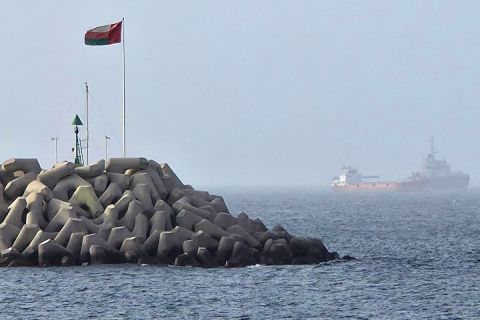
Under the bilateral understanding, the existing northern shipping route near Lark Island will be closed, while commercial vessels will instead use a new southern corridor located primarily within Omani territorial waters.
However, a substantial portion of the route will continue to pass through Iranian territorial waters before ships enter or leave Omani waters. Iranian officials said the new corridor is intended exclusively for commercial shipping and was designed jointly by Tehran and Muscat to improve navigational safety while reflecting the security realities that have emerged since the escalation in the Gulf.
The agreement follows nearly two months of negotiations between Iran and Oman over the geographic coordinates and operational framework of the new shipping route. Iranian Foreign Ministry spokesperson Esmaeil Baghaei said earlier that the two countries had reached a mutual understanding on the corridor but cautioned that the agreement does not mean the Strait of Hormuz is yet safe for normal navigation. He added that a joint statement remains under preparation and will be issued only if no external obstacles arise.


