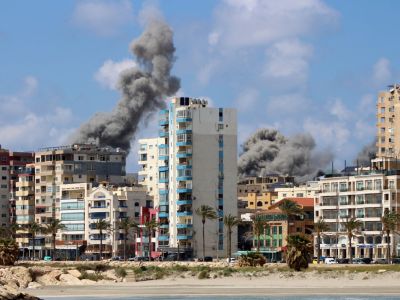
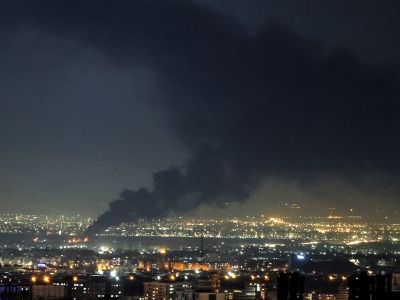
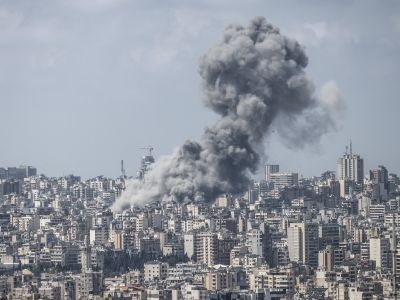
International oil company executives in Sudan turned a blind eye to well-reported government attacks on civilian targets, including aerial bombing of hospitals, churches, relief operations and schools, Human Rights Watch said in a recent report.
The Sudanese government's efforts to control oilfields in the war-torn south have resulted in the displacement of hundreds of thousands of civilians, Human Rights Watch said. Foreign oil companies operating in Sudan have been complicit in this displacement, and the death and destruction that have accompanied it.
The report provides evidence of the complicity of oil companies in the human rights abuses carried out during Sudan’s civil war. The report provides evidence of the complicity of oil companies in the human rights abuses carried out during Sudan’s civil war. It documents how the government has used the roads, bridges and airfields built by the oil companies as a means for it to launch attacks on civilians in the southern oil region of Western Upper Nile.
"Oil companies operating in Sudan were aware of the killing, bombing, and looting that took place in the south, all in the name of opening up the oilfields," said Sudan researcher for Human Rights Watch, Jemera Rone. "These facts were repeatedly brought to their attention in public and private meetings, but they continued to operate and make a profit as the devastation went on."
Statistics from the Sudanese government and the oil companies show how the major share of the $580 million received in oil revenue by this poverty-stricken country in 2001 was absorbed by its military, both for foreign weapons purchases and for the development of a domestic arms industry.
Human Rights Watch urged that the current peace negotiations deal comprehensively with the legacy of Sudan's oil war, particularly the ethnic divisions that persist in oilfields of the south and threaten the long-term peace.
Conditions for civilians in the oilfields actually worsened when the Canadian company Talisman Energy and the Swedish company Lundin Oil were lead partners in two concessions in southern Sudan. Amid mounting pressure from rights groups, Talisman sold its interest in its Sudanese concessions in late 2002 and Lundin followed in June.
These Western-based corporations were replaced by China’s state-owned China National Petroleum Corporation and Malaysia’s Petronas (CNPC), which had already been partners with Talisman and Lundin. Following CNPC and Petronas, a third state-owned Asian oil company, India's ONGC Videsh began operations in Sudan.
"The Sudanese government has used the oil money in conducting scorched-earth campaigns to drive hundreds of thousands of farmers and pastoralists from their homes atop the oil fields," said Rone. "These civilians have not been compensated nor relocated peacefully-far from it. Instead, government forces have looted their cattle and grain, and destroyed their homes and villages, killed and injured their relatives, and even prevented emergency relief agencies from bringing any assistance to them."
The 20-year civil war in Sudan has been fought between the Islamist, northern-based Arab-speaking government and the vast marginalized African populations of southern Sudan, where the Sudan People's Liberation Movement/Army (SPLM/A) has been the largest rebel group. The war spread to eastern and central Sudan, and while the parties signed a cease-fire agreement in October 2002 western Sudan remains engulfed in war.
Peace talks promoted by a the United States, Britain and Norway have been underway in Kenya since June 2002. However, the Sudanese government and the SPLM/A, the only parties attending the talks, have yet to agree on how to share revenue from the oil reserves, most of which lie in the south. The northern-based government has agreed to a self-determination referendum for the south, but not until six years after the peace agreement is signed.
Human Rights Watch is an independent, nongovernmental organization, supported by contributions from private individuals and foundations worldwide. It accepts no government funds, directly or indirectly. — (menareport.com)
© 2003 Mena Report (www.menareport.com)