ALBAWABA - Mawlana sparks debate over similarities to Iranian film.

The series “Mawlana” is a copy of an Iranian film. This is how the show was described on social media after its airing at the beginning of Ramadan sparked widespread controversy and debate. Many viewers noticed a striking similarity between the Syrian series and the Iranian film “The Lizard,” particularly in the main plotline. In this story, the protagonist, on the run from the authorities, arrives in a village where the inhabitants treat him like a religious figure, resorting to deception, murder, or theft.
Given this similarity, a fundamental question arises: Is “Mawlana” inspired by “The Lizard,” or is it a direct adaptation, or is it simply a coincidence of ideas?
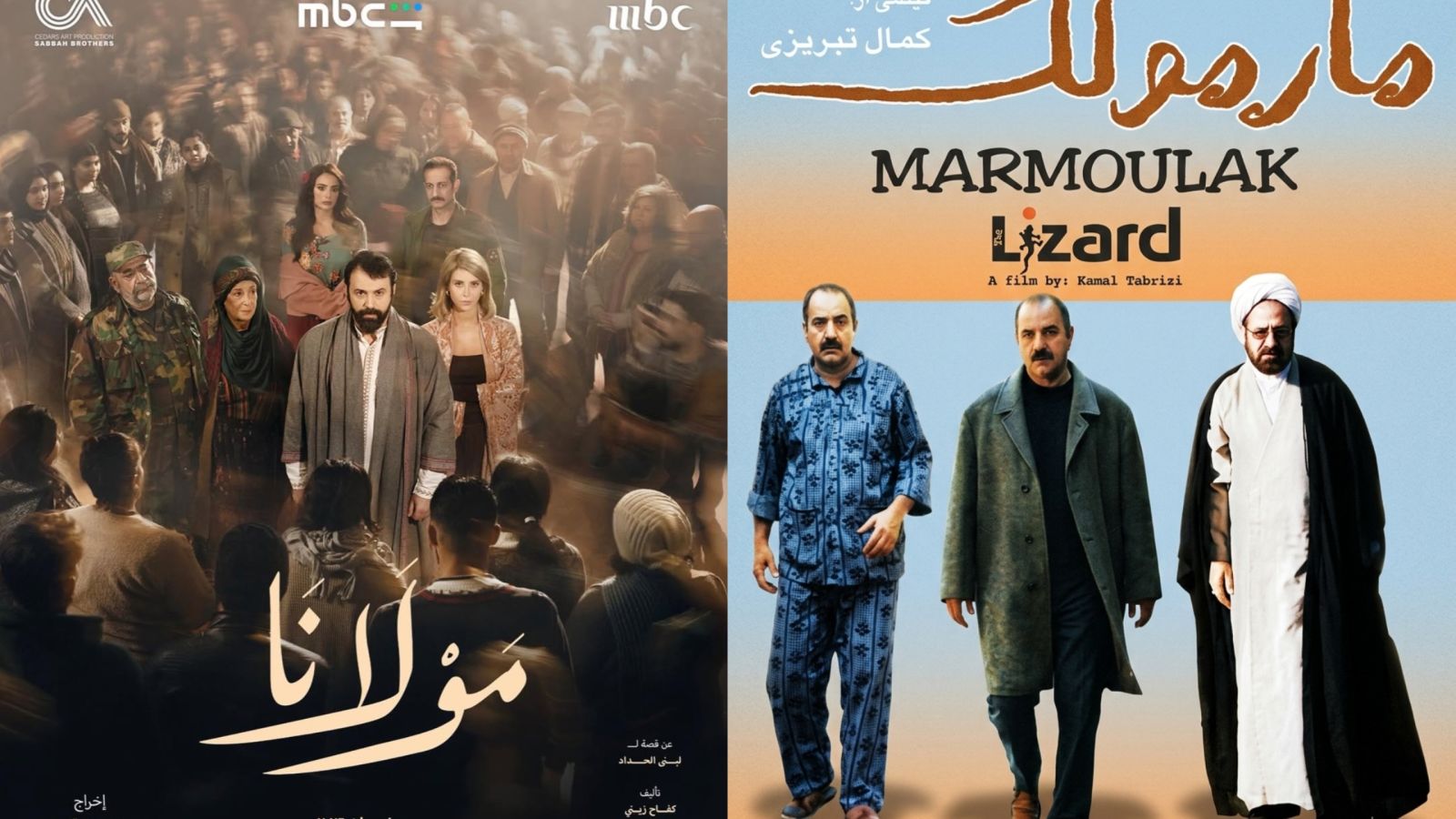
“The Lizard” tells the story of a professional thief nicknamed “The Lizard” for his repeated escapes from prison. After his arrest, he is taken to a hospital for treatment, where he meets a religious figure who is also receiving treatment there. He spends several days with the cleric. As his release date approaches, he begins searching for a way to escape, and the idea occurs to him to steal the cleric's clothes and disguise himself as him.
From the moment he leaves the hospital wearing religious garb, his new journey begins, a flight from his past. He seeks a forged passport to secure his escape, but fate leads him to a small village where the inhabitants mistake him for the awaited new imam. They ask him to lead prayers and deliver sermons in the mosque, forcing him to conform to their ways to avoid detection. However, his daily interactions with the villagers and the simplicity of their lives gradually begin to influence him.
With its many diverse events, the film blends comedy and social commentary, offering a satirical and humane treatment of the issues of identity, religiosity, and the search for salvation.
“Mawlana”
As for “Mawlana,” its events unfold when Jaber, or “Zaber” (Tim Hassan), kills his sister’s husband, a security officer, in her defense. He then finds himself pursued and forced to flee to Latakia. On his journey, he meets Salim al-Adil, who is returning to his village to claim his inheritance. Salim offers to accompany him and work with him. However, everything changes after Salim al-Adil is killed in a car accident. Zaber seizes the opportunity, impersonating Salim and heading to the village of al-Adiliya to escape the country, as it is located on the border.
In al-Adiliya, the villagers welcome him as if he were their savior, calling him "Mawlana" (our master), a title derived from his family lineage, as one of his ancestors was a saint. In his first attempt to escape, Jaber, or "Zaber," fails. As the details of the village are revealed, he realizes he cannot leave whenever he pleases and remains trapped, gradually becoming entangled in the affairs of its inhabitants.
Amidst this tension and conflict, the work presents clear social and political dimensions, addressing issues of influence, identity, religion, and the abuse of power. This is all within a dramatic structure built on escalating tension and psychological transformations, infused with a comedic touch evident in Jaber's style and his sharp, satirical speech and actions.
Between “Mawlana” and “The Lizard”
A clear similarity emerges in the central theme of both works; the protagonist of each flees persecution and resorts to assuming a religious identity as a means of concealment and avoiding the exposure of his true nature. However, this overlap in the general idea does not negate the existence of fundamental differences in the dramatic structure, context, and treatment.
Firstly, in terms of the characters and their motivations, Jaber flees after being implicated in a murder, only to find himself compelled to adopt an identity he had not planned for. As for Reda in “The Lizard,” he escapes while serving a prison sentence for theft and deliberately decides to impersonate a religious figure.
The turning point also differs in the two works; Jaber arrives in the village of Al-Adiliya driven by greed and a desire to escape, unaware that he will become “Mawlana,” while Reda begins his disguise with clear intent from the moment he leaves the hospital.
Secondly, on an artistic level, "Mawlana" belongs to the genre of social drama with a political dimension, adopting a realistic approach that places the protagonist in direct confrontation with networks of influence and power. In contrast, "The Lizard" is classified as a satirical comedy that employs irony and sarcasm to offer social and religious critique, relying more on humor than confrontation.
As for the nature of the conflict, "Mawlana" revolves around a clear external conflict between the individual and the institutions of power, addressing issues of land, control, and security pressures. "The Lizard," on the other hand, combines internal and external conflicts, focusing on the crisis of identity, the possibility of repentance and personal transformation, and society's view of the religious figure.
So, the similarity between the two works seems to be limited to a broad idea, while their dramatic style and deeper meanings are different, making the comparison more about shared themes than direct copying.
Anyone who follows the two works will notice fundamental differences in their dramatic structure, plot development, and character formation, significantly diminishing the basis for comparison, let alone accusations of one being a mere copy of the other. While the theme of impersonating a religious figure to escape is not new and has been explored in numerous works worldwide, the value of each work is determined by its context, treatment, and artistic vision, not simply by a shared general idea.