ALBAWABA- Pakistan has indicated that its Strategic Mutual Defense Agreement (SMDA) with Saudi Arabia could be expanded to include Turkey and Qatar, in a move that may reshape emerging security alignments across the Middle East and South Asia.
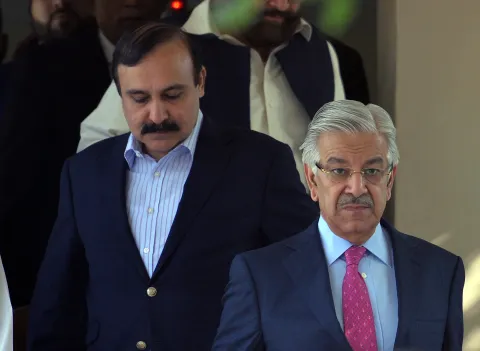
Pakistani Defense Minister Khawaja Asif said Turkey and Qatar are “likely candidates” for future inclusion in or parallel agreements with the existing framework, which treats any aggression against one signatory as an attack on both.
He said the initiative aims to build a broader platform of cooperation among “like-minded” states to strengthen regional stability and collective security.
While discussions involving Turkey were reported to be advanced earlier in 2026, no formal multilateral agreement has yet been concluded.
The original defence pact, known as the Strategic Mutual Defence Agreement, was signed in Riyadh on September 17, 2025, by Pakistani Prime Minister Shehbaz Sharif and Saudi Crown Prince Mohammed bin Salman. The agreement institutionalises decades of military cooperation, including joint training, defence coordination, and long-standing Pakistani support for Saudi security arrangements.
Its central clause establishes that an attack on either country would be treated as an attack on both, creating a mutual deterrence framework without forming an integrated command structure or automatic military response mechanism.
The pact is seen as strengthening Saudi Arabia’s security posture amid regional volatility while deepening Pakistan’s strategic influence in the Gulf. Previous comments suggesting the arrangement could extend to a nuclear umbrella were later clarified by officials.
The potential expansion comes amid broader realignments in the region, as states reassess alliances following heightened tensions involving Israel, Iran, and regional proxy conflicts. Turkey has pursued a more independent regional security role, while Qatar maintains close defence and diplomatic ties with Pakistan.
The development also comes as Israeli Prime Minister Benjamin Netanyahu has promoted an alternative regional alignment framework dubbed the “Hexagon of Alliances,” envisioned as a security and economic bloc linking Israel with partners including India, Greece, Cyprus, and select Arab, African, and Asian states.
Both initiatives reflect intensifying coalition-building in an increasingly multipolar regional order, where competing security architectures are taking shape outside traditional Western-led frameworks.