Dr. Gil Feiler
Introduction and Background
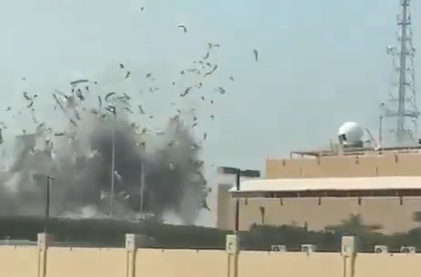
On 28 February 2026, the Islamic Republic of Iran came under military attack by the State of Israel, with reports of explosions in Tehran and surrounding areas following an Israeli announcement of a “pre-emptive strike.” Indonesia’s Reuters and Associated Press confirm that strikes occurred near Iran’s political and military infrastructure, triggering elevated alert levels in Israel and regional military posturing.
These attacks reportedly coincide with an enhanced U.S. military presence in the region and heightened political friction over Iran’s nuclear program — with Trump administration officials publicly stating that military force remains an option against Tehran.
The situation builds on longstanding tensions, particularly the June 2025 Iran–Israel conflict, when Israel carried out large-scale airstrikes on Iranian nuclear facilities and military targets, leading to retaliatory Iranian missile and drone attacks against Israel.
Strategic Intentions and Actor Objectives
U.S. and Israeli Aims: The strategic rationale publicly articulated by Israeli defense authorities frames the strikes as pre-emptive actions to neutralize threats to national security and to disrupt Iran’s nuclear and ballistic missile programs. Similar messaging from the Trump administration has underscored the possibility of force if Tehran does not sufficiently curb its nuclear ambitions.
Iran’s Position:
Iran denies that its nuclear program is aimed at weaponization and has pledged to defend itself. Tehran has warned of potential retaliation and rallied regional allies — including Houthi groups in Yemen and militias in Iraq — to prepare for broader conflict if it is attacked.
Evaluating the Prospects of Regime Change
Proponents of a more aggressive military campaign often argue that dismantling theocratic rule in Tehran could end what they see as the regime’s destabilizing influence in the Middle East. However, historical and geopolitical evidence suggests that regime change is extremely unlikely to result solely from airstrikes or limited military engagements.
Regime Resilience: Iran’s political system is ideologically reinforced and has withstood decades of pressure since the 1979 Islamic Revolution. During earlier conflicts, including the 2025 war, the regime maintained cohesion despite significant losses and social unrest.
Nationalism and Rally-‘Round-the-Flag Effect: External attacks often bolster domestic support for the leadership, particularly in systems that conflate national survival with political legitimacy.
Mass demonstrations and anti-government protests have occurred, but there is limited evidence that these movements have the structural capacity to topple the regime in the absence of an internal political fracture or elite defection.
International and Regional Constraints: Russia and China maintain strategic ties with Iran that would complicate efforts to isolate Tehran entirely.
Regional actors vary in interests; some oppose Iranian influence, while others calculate that preserving a stable Iranian state is preferable to complete collapse.
Accordingly, military action alone — even in conjunction with U.S. pressure — is unlikely to displace Iran’s governing structures in the near term without sustained internal insurrection or coordinated external political initiatives.
Potential Consequences and Risks
If the strikes escalate, a number of destabilizing outcomes could materialize: Regional escalation: Iran’s allies could open additional fronts, especially in Iraq, Syria, Yemen, and Lebanon. Global economic disruption: Oil markets remain sensitive to conflict near the Strait of Hormuz, with price volatility already observed during past confrontations. Humanitarian impact: Civilian harm could fuel cycles of retaliation and deepen hostilities.
Simultaneously, robust diplomacy persists in parallel, with ongoing indirect nuclear negotiations indicating that all parties remain at least nominally open to non-military resolution.
Conclusion: Assessment of Regime Change Prospects
In sum, while the recent attacks represent potentially the most serious military escalation against Iran in years, there is currently no substantiated indication that the U.S. and Israel collectively aim — or will succeed — in effecting regime overthrow through these strikes alone. Historical precedent, structural resilience within Iranian governance, and strategic incentives for international actors all suggest that regime change via military means remains an unlikely outcome absent extraordinary developments.