ALBAWABA- Syria’s presidency announced on Tuesday that it has reached an understanding with the Kurdish-led Syrian Democratic Forces (SDF), giving the group four days to agree on a framework for the practical integration of Hasakah province into central government control.
The move follows a ceasefire agreement signed on January 18, amid continued tension and sporadic clashes in northeastern Syria.
According to the statement, talks during the four-day window will focus on timelines and implementation mechanisms for a peaceful transition, including arrangements for the strategic city of Qamishli. Syrian government forces will refrain from entering Hasakah city during the negotiations, provided the ceasefire holds.
The agreement received U.S. endorsement, with U.S. Special Envoy to Syria Tom Barrack praising the ceasefire in a post on X. Barrack described the deal as a “pivotal inflection point,” saying it marked a shift from confrontation to cooperation.
He noted that President Ahmed al-Sharaa has affirmed that Kurds are an integral part of Syria, adding that Washington supports the orderly integration of the SDF, a longtime U.S. partner in the fight against ISIS, into a unified Syrian state.
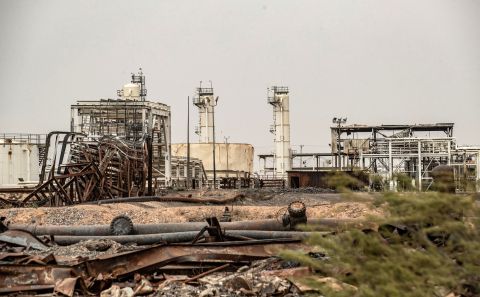
The announcement comes amid the rapid unraveling of SDF control following a government offensive launched on January 6, after drone attacks in Aleppo. Kurdish-led forces withdrew from nearly half of their territory, including the Arab-majority provinces of Raqqa and Deir ez-Zor, handing over oil fields, border crossings, and ISIS detention facilities.
Syrian troops subsequently imposed curfews in several areas, including al-Shaddadi, as reports emerged of escaped ISIS detainees, heightening fears of a militant resurgence. The SDF denied intentionally releasing prisoners, blaming attacks by Damascus-aligned factions for the security breakdown.
Under the January 18 accord, a 14-point, U.S.-mediated agreement signed by al-Sharaa and SDF commander Mazloum Abdi, the SDF agreed to the immediate handover of Raqqa and Deir ez-Zor.
Its fighters are to be integrated individually, after vetting, into Syria’s defense and interior ministries, effectively dismantling the SDF as a unified military force. The transition in Hasakah is to proceed gradually, while Kobani will retain limited local security arrangements.
Once backed by Washington and controlling nearly a quarter of Syria after the defeat of ISIS in 2019, the SDF now faces the end of its autonomous role, driven by tribal uprisings, sustained government advances, and internal divisions.