ALBAWABA - Iran is going through one of its most delicate political times in years as officials, analysts, and diplomats publicly warn that recent US actions against Venezuela may indicate a similar strategy being considered for Tehran, with Supreme Leader Ali Khamenei emerging as the potential ultimate target.
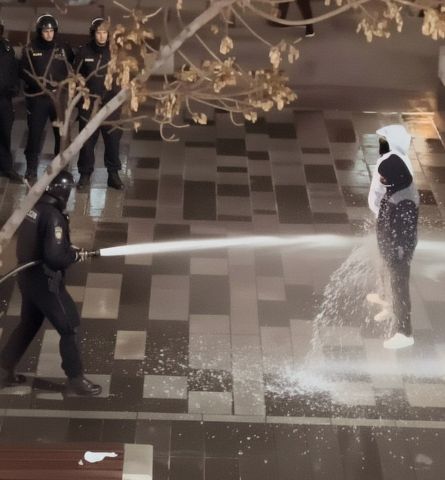
The warnings come amid growing domestic unrest, increasing economic pressure, and heightened regional tensions, fueling fears inside Iran that Washington may try to weaken the Islamic Republic by striking at the heart of its leadership rather than engaging in a conventional war, according to experts cited by Iranian and regional media.
According to analysts, the success of such an approach would largely depend on the nature of the targets chosen. They contend that any American response, if it were to be implemented, would probably rely on ultra-accurate strikes targeting strategic centers of power, such as leadership facilities and important institutions associated with the Islamic Revolutionary Guard Corps (IRGC), while purposefully avoiding indiscriminate warfare that could plunge the nation into chaos.
They suggest that Washington's goal would not be widespread destruction but rather to undermine the regime's core authority in a way that could embolden protesters and accelerate internal pressure—mirroring what they refer to as the "Venezuela model," in which leadership was isolated without dismantling the state entirely.
The effectiveness of any possible US action, according to Mona Silawi, a researcher who specializes in Iranian affairs, would depend on striking what she called "centers of gravity," such as the supreme leader's residence, provincial security institutions, and IRGC headquarters in strategically sensitive areas like Khuzestan in southwest Iran.
She also said that US strikes could go beyond Iran's borders to target Iran-aligned militias in neighboring countries, especially Iraq, amid reports that some militia elements have entered Iran to aid in the suppression of protests. However, Silawi cautionary or indiscriminate strikes could backfire by accusing protestors of working with the US and Israel.
The current situation is a historic crossroads, according to Iranian political analyst Ziad Aitani, who said that the US wants to engineer change in Iran and that the clerical establishment is strongly opposed to such a transformation. He said that the situation is similar to Venezuela in that it involves attempts to "decapitate" the system by excluding its highest authority while maintaining institutional continuity to avoid regional instability.
Iranian officials have vehemently denied such narratives.Iran's UN ambassador, Amir Saeid Iravani, has accused the US and Israel of inciting unrest and destabilization, framing the current protests as part of a coordinated foreign campaign.
As tensions continue to rise, Iranian authorities insist that any attempt to target Khamenei or replicate the Venezuelan precedent will fail, while observers warn that the convergence of internal unrest and external pressure has placed Iran in one of the most volatile phases of its modern history. Foreign Minister Abbas Araghchi accused Washington of trying—and failing—to impose the Venezuelan scenario on Iran.