ALBAWABA- Israeli Prime Minister Benjamin Netanyahu described the Middle East as the “stronghold of radical Islam” during a joint address to the Knesset with visiting Indian Prime Minister Narendra Modi, framing Israel’s regional strategy in starkly religious and civilizational terms.
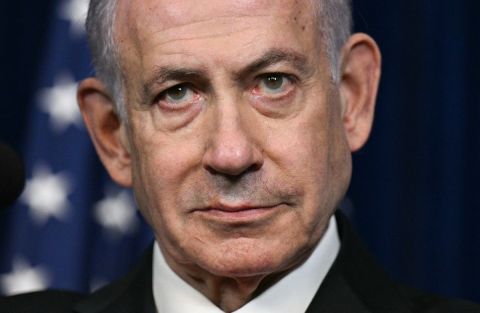
“Israel continues to stand at the forefront of civilization in the face of extremist Islam,” Netanyahu said. “The stronghold of extremist Islam is the Middle East. But the ashes of this fanaticism are spreading to every continent and every country.”
His remarks, delivered during Modi’s state visit, underscored what critics describe as a growing tendency by Israel’s leadership to cast regional conflicts in explicitly religious terms, portraying the broader Muslim world as a source of extremism while calling for a bloc of “moderate nations” to counter it.
Netanyahu reiterated his proposal for what he has termed a strategic “hexagon” alliance bringing together India, Greece, Cyprus, selected Arab states, widely believed to include the United Arab Emirates, as well as African partners such as Ethiopia and other Asian countries.
The alliance, he said, would confront both the Iran-led Shia axis and a Sunni bloc associated with the Muslim Brotherhood, while strengthening cooperation in defense, technology and trade.
Modi, addressing lawmakers after Netanyahu, voiced strong solidarity with Israel, stating that “nothing can justify terrorism” and that “terror anywhere threatens peace everywhere.” He reaffirmed India’s support for Israel’s security and highlighted expanding bilateral ties in defense, innovation, and commerce.
Netanyahu praised Modi as a “brother” and described the partnership as a powerful strategic multiplier, thanking India for its backing following the 2023 Hamas attacks.
The increasingly religious framing of Israeli policy has gained momentum in recent days. U.S. Ambassador to Israel Mike Huckabee sparked controversy on February 20 when he cited biblical scripture to suggest Israel held a “divine right” to territory stretching from the Nile to the Euphrates, comments widely interpreted in the region as endorsing the idea of a “Greater Israel.”
On February 24, opposition leader Yair Lapid, often regarded internationally as a centrist alternative to Netanyahu, echoed biblical references in defending Zionism, saying the Jewish mandate over the Land of Israel was rooted in scripture and that “the biblical borders of the Land of Israel are clear.”
While Lapid added that practical security considerations must guide policy, his remarks signaled that religious narratives are resonating beyond Israel’s governing coalition.
Former Prime Minister Naftali Bennett further intensified rhetoric earlier this month by describing Turkey as “the new Iran,” accusing President Recep Tayyip Erdoğan of seeking to encircle Israel through a Turkish-Qatari Sunni axis.
The convergence of biblical claims and sweeping characterizations of “radical Islam” risks deepening sectarian fault lines across the Middle East at a time when Israel is accused by many UN organizations of committing genocidal acts in Gaza, and Netanyahu himself is wanted as a war criminal by the ICJ.
While Netanyahu argues that Israel is defending “civilization” against extremism, critics warn that framing regional politics as a religious struggle could further polarize an already volatile region and complicate prospects for diplomatic engagement.