


ALBAWABA- Yemen’s political crisis deepened dramatically this week after Aidroos Al-Zubaidi, head of the UAE-backed Southern Transitional Council (STC) and a member of the internationally recognized Presidential Leadership Council (PLC), was stripped of his official status, charged with high treason, and referred to prosecution.

Authorities say Al-Zubaidi fled to an unknown destination late last night, just hours before he was due to travel to Saudi Arabia with other STC leaders. His whereabouts remain unknown.
The move marks the most serious rupture yet between the Yemeni state and the STC, and signals a decisive escalation in the long-simmering Saudi-Emirati power struggle inside Yemen.
According to official decisions issued by the presidency, two cabinet ministers aligned with the STC, Transport Minister Abdulsalam Humaid and Planning and International Cooperation Minister Waed Badhaib, were also dismissed and referred for trial, alongside Aden Governor Ahmed Lamlas.
Many senior military commanders were likewise sent to military courts on charges of national treason, accused of acting outside the authority of the state and coordinating with foreign powers.
Within hours of the announcements, Saudi Arabia launched airstrikes on ammunition depots reportedly being transferred from Aden toward Al-Dhale, Al-Zubaidi’s home stronghold, hitting a military camp linked to STC forces. At the same time, Saudi-backed National Shield Forces and Giants Brigades deployed across Aden, Abyan, and Shabwah, effectively tightening the noose around UAE-backed STC militias and cutting their lines of movement.
The security crackdown follows an extraordinary political step taken just days earlier, when Yemen formally expelled the United Arab Emirates, ordering it to withdraw all personnel and equipment within 24 hours. The decision effectively ended Abu Dhabi’s role in Yemen as part of the Saudi-led Arab coalition launched on March 26, 2015, ostensibly to restore the Yemeni state and counter Houthi expansion and Iranian influence.
What had long been described as a “Tom and Jerry” conflict, Riyadh and Abu Dhabi competing through proxies while publicly maintaining alliance unity, has now turned into a direct “fire and iron” confrontation.
The fallout threatens not only Yemen’s fragile sovereignty, but also the cohesion of the Gulf Cooperation Council (GCC) itself, where Saudi Arabia and the UAE had presented a united front against the Arab Spring since 2011.
The rupture burst into the open on January 3, when PLC Chairman Rashad Al-Alimi declared a state of emergency, citing coordinated STC military advances into Hadramout and Al-Mahra. Those moves were viewed in Riyadh and Muscat as a direct threat to Saudi and Omani border security, and as part of a broader regional realignment.
Yemeni officials point to the timing of these events alongside intensifying UAE-Israeli coordination in the Red Sea and Horn of Africa, including Israel’s recognition of Somaliland, an Israeli foreign ministerial visit there, and a parallel trip by UAE Minister of State Shakhboot bin Nahyan to Ethiopia. The emerging Israeli-Emirati-Ethiopian axis, they argue, aims to reshape power balances in Sudan, Somalia, and Red Sea security, sidelining traditional Arab actors.
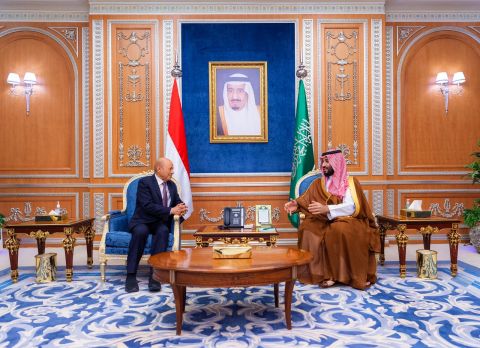
Saudi Arabia has responded with counter-diplomacy, including high-level visits to Egypt and Sudan, and renewed coordination with Turkey and Cairo, signaling a broader effort to contain what it sees as a destabilizing geopolitical shift.
The revocation and prosecution of Aidroos Al-Zubaidi is therefore not an isolated legal step, but the culmination of a rapid, high-stakes sequence. The exposure of the Saudi-UAE rift, the expulsion of Abu Dhabi from Yemen, military redeployments on the ground, and now the collapse of the STC’s political cover.
Together, these moves suggest Yemen is entering a new and far more dangerous phase, where regional rivalries are no longer hidden behind proxy wars, but openly redefining the conflict and the region itself.